ASEAN Law Conference 2026
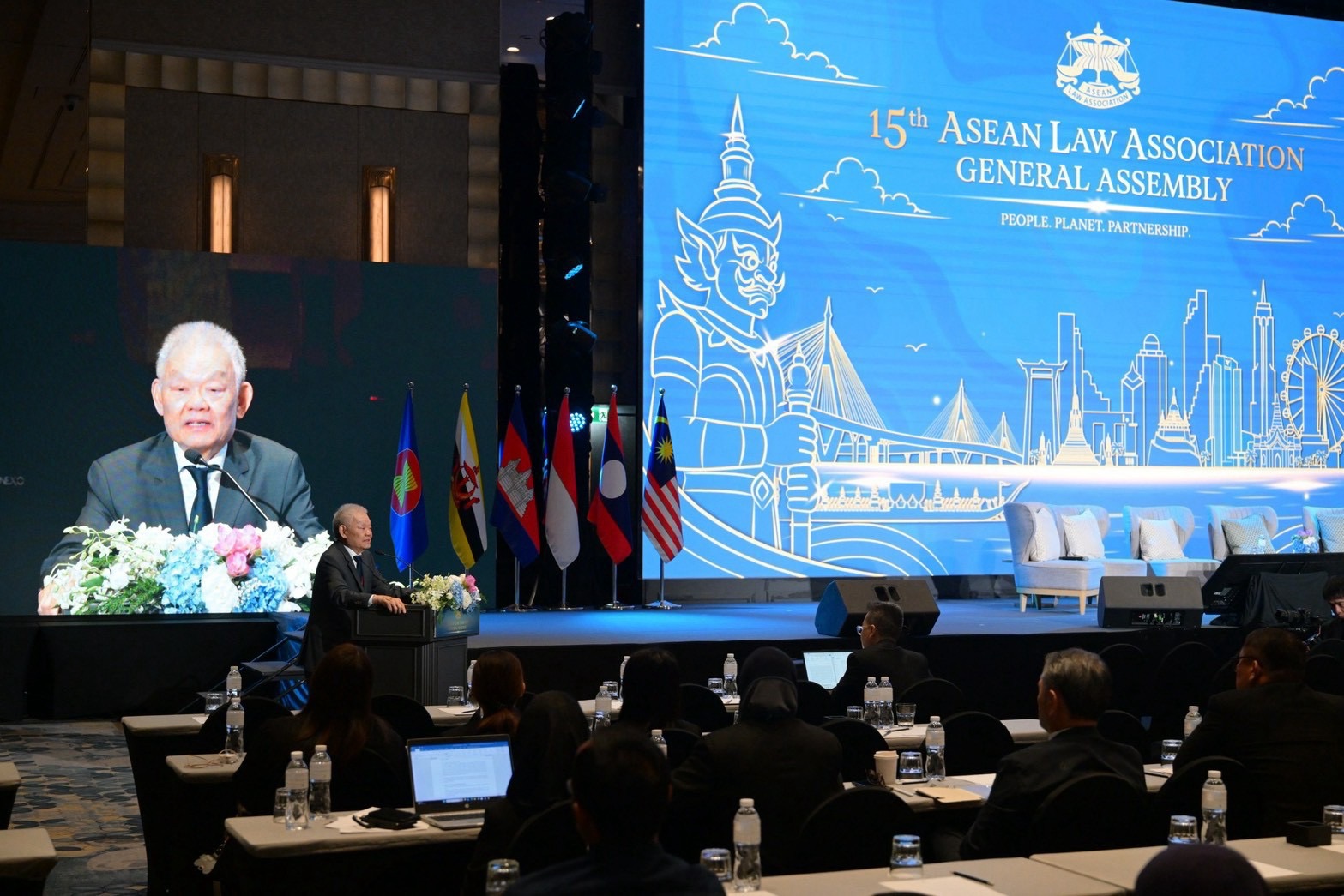
From 21 to 23 July 2026 at the InterContinental Hotel Ratchaprasong, Bangkok, the ASEAN Law Association of Thailand hosted the ASEAN Law Conference 2026, held as part of the 15th ASEAN Law Association General Assembly. Justice Pongdej Wanichkittikul, Presiding Justice of the Supreme Court of Thailand, delivered opening remarks and officially opened the law conference. The conference was held under the overarching theme "People. Planet. Partnership." to highlight the importance of human rights, the rule of law, responsible business conduct, the urgency of addressing environmental challenges, and regional cooperation to keep pace with modern-day challenges. Participants tackled a broad agenda spanning international arbitration, gender equality, climate law, corporate accountability, emerging technology, and the future of legal education.
Day 1: ASEAN Arbitration Day
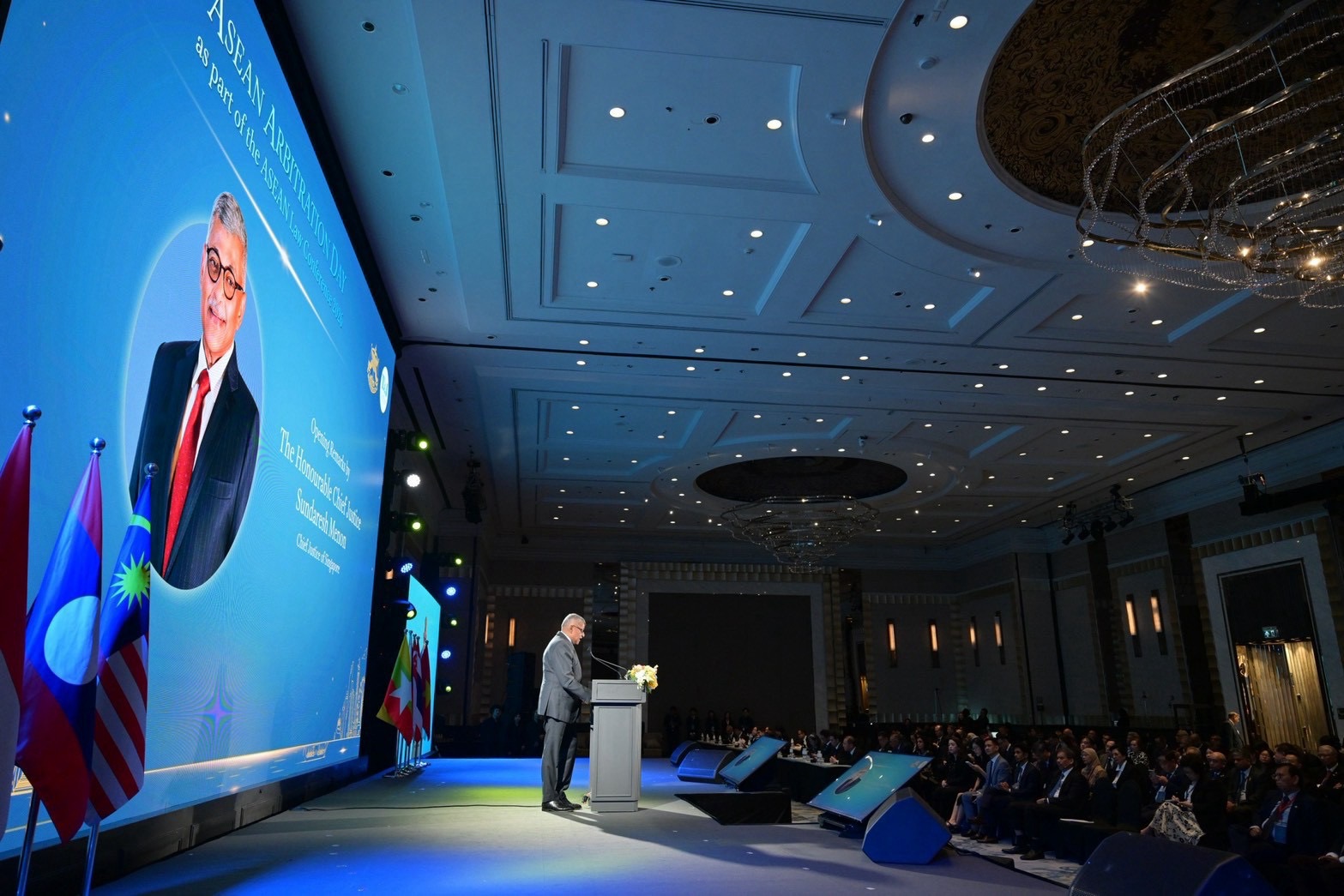
The conference kicked off with ASEAN Arbitration Day, co-hosted with the Office of the Judiciary of Thailand and the Thai Arbitration Institute (TAI). The Honourable Chief Justice Sundaresh Menon of Singapore delivered the opening remarks, making a compelling case for legal convergence as the cornerstone of a credible regional arbitration ecosystem. Chief Justice Menon proposed the establishment of an ASEAN Arbitration Judges Forum to foster judicial dialogue and align enforcement practices across member states.
Session 1 – Enforcement and Challenge of Arbitral Awards Across ASEAN: Panelists from Malaysia, Singapore, Thailand, and Vietnam highlighted that regional courts share substantial common ground under the New York Convention—respecting party autonomy, intervening sparingly, and enforcing awards as final. Remaining divergences center primarily on procedural rules and national interpretations of the public policy exception.
Session 2 – Investor Perspectives on ASEAN-seated Arbitration: Counsel from Thailand, Japan, and international firms emphasized that investors prioritize transparency, neutrality, reliability, and speed. Panelists noted that arbitration cannot function in isolation from domestic courts and authorities, on which financial recovery ultimately rests.
Session 3 – The Future of ASEAN Arbitration: Dr. Crina Baltag of Queen Mary University of London outlined three foundational pillars for regional competitiveness: principled harmonisation, responsible innovation, and strong institutions. A special topic was also presented by Thailand's Office of the Council of State on the "Singapore-Thailand Legal Database Project," highlighting bilateral efforts to enhance legal transparency and facilitate cross-border trade.
Day 2: Gender Equality, Environment, Business, and Technology
The second day opened with special remarks from Dr. Vilawan Mangklatanakul, Member of the International Law Commission, who underscored Southeast Asia's growing influence in shaping international legal frameworks and the necessity of coordinated legal solutions to cross-border challenges.
Session 4 – Law & Gender Equality: Panelists from Malaysia, Thailand, Vietnam, and UN Women stressed that closing the gender gap relies heavily on enforcement and judicial willingness to dismantle structural bias, with a focus on cross-border protection for vulnerable groups including migrant domestic workers.
Session 5 – Law & Environment: Representatives from Brunei Darussalam, Indonesia, and Thailand presented national routes toward Net-Zero emissions, outlining national climate strategies and agreeing that policy execution requires consistent climate legislation backed by the ASEAN Common Carbon Framework.
Session 6 – Law & Business: Co-hosted with the UNDP, experts from Indonesia, Japan, and Thailand outlined the regional shift from voluntary standards to mandatory human-rights due diligence and supply-chain accountability, focusing on balancing legal compliance with corporate competitiveness.
Session 7 – Law & Technology: Jurists from the Philippines, Singapore, and Thailand evaluated the opportunities and risks of Generative AI in court submissions, warning against hallucinated citations, synthetic evidence, and confidentiality breaches, concluding that legal integrity must remain uncompromised.
Day 3: Law and Education
The final morning focused on the future of legal education across Southeast Asia, featuring insights from legal educators representing Indonesia, Malaysia, Singapore, Thailand, and Vietnam. Panelists emphasized that educational innovation must move in tandem with social inclusion and shared regional benchmarks, cultivating legal professionals who combine technical rigor and digital fluency with an ethical foundation and commitment to public access to justice.
The ASEAN Law Conference 2026 concluded with a closing keynote address by Adjunct Professor Vichai Ariyanuntaka, former ALA Secretary-General and Honorary Advisor of the TAI, who reflected on the conference outcomes and the path forward for regional legal harmonisation and cooperation.